Recommendations

Charting a path forward

Introduction

This plan recommends a set of strategies to reach the City and County’s goal of becoming 100% carbon neutral by 2035. 

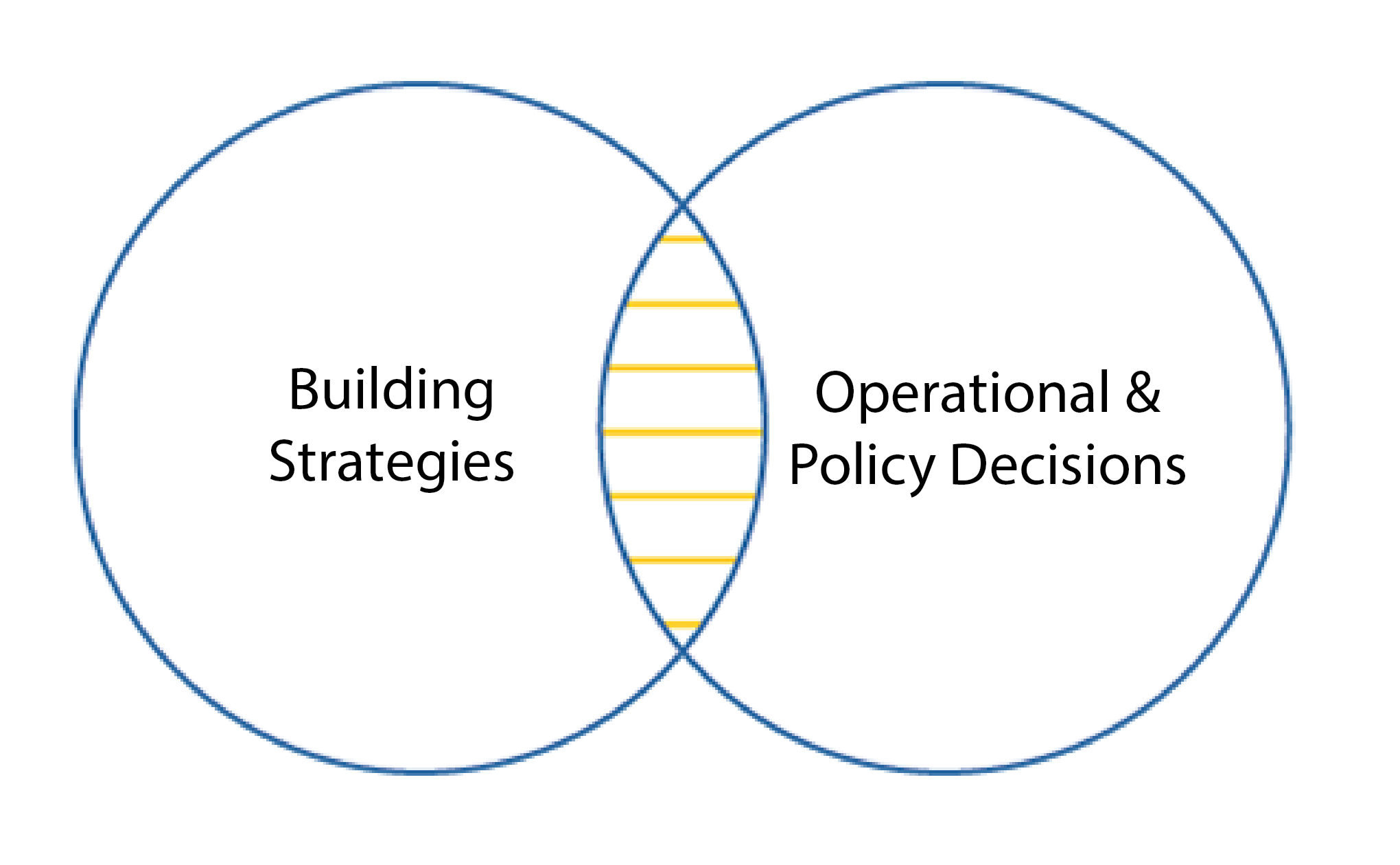
The plan includes two types of strategies:
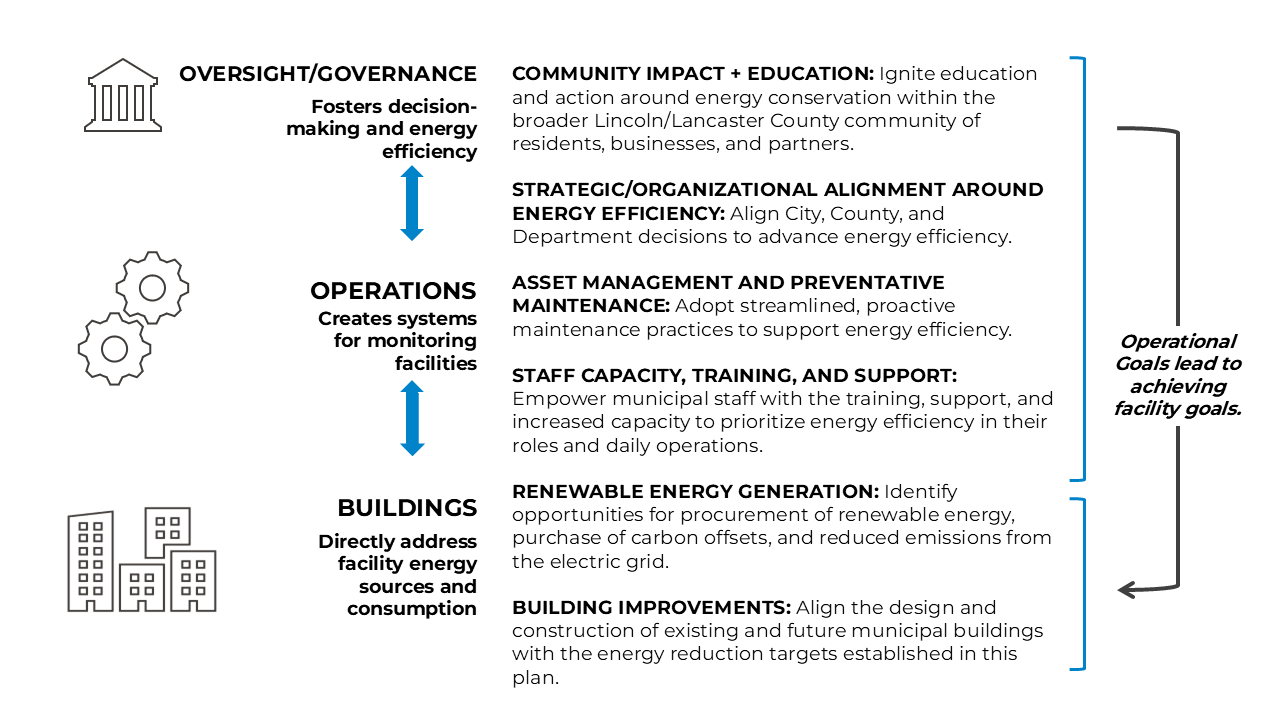
  • Building strategies recommend physical improvements to municipal buildings and properties to reduce energy consumption, increase energy efficiency, and generate renewable energy. 
  • Operational strategies recommend policy, practice, and behavior changes to support energy efficiency. 
These recommendations were developed through analysis of municipal buildings and operations, in collaboration with City and County officials, to address the unique challenges and opportunities outlined in the Key Findings. A combination of both physical and operational strategies will ensure that buildings are designed, managed, and maintained to support energy efficiency and reach carbon neutrality.

Building Recommendations

After analyzing all the data, doing walk-throughs, interviewing occupants, and compiling building condition assessments, recommendations were developed of what level of intervention buildings in the portfolio needed.

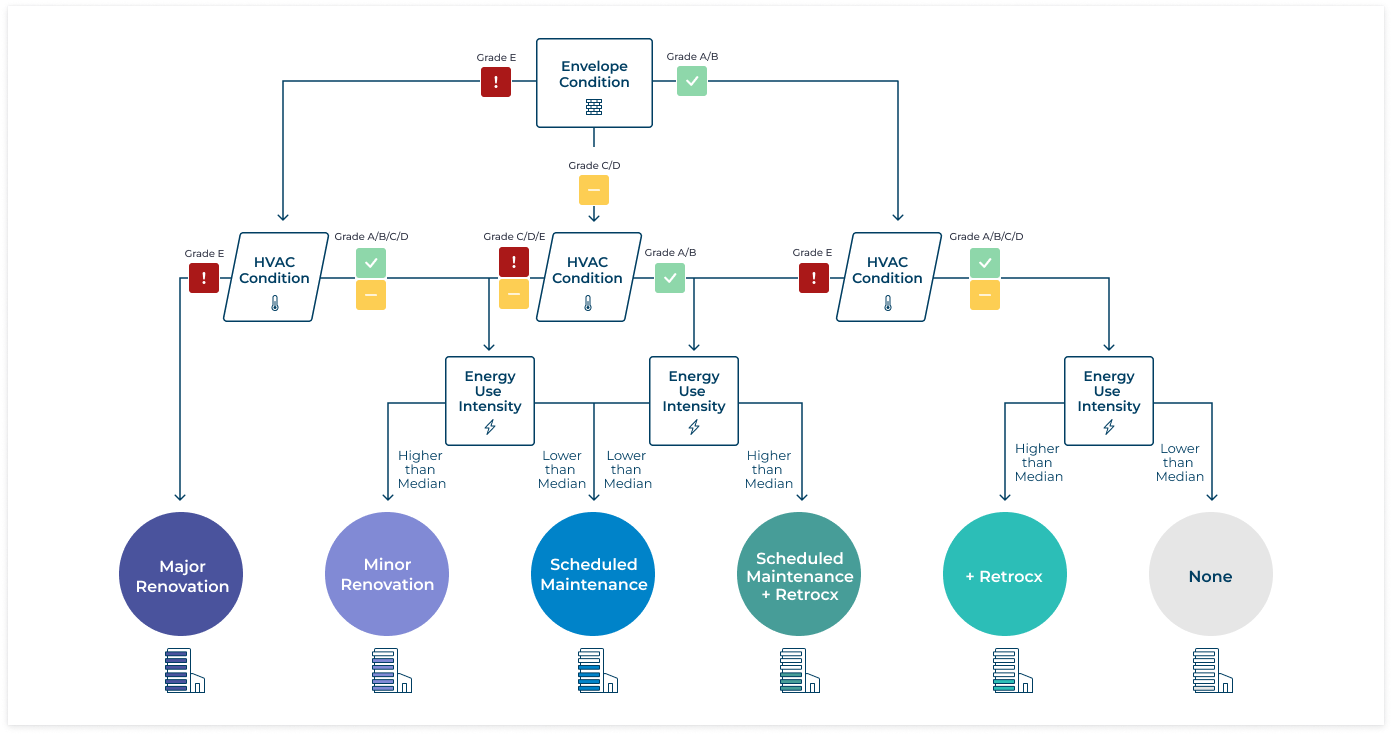
In addition to review of 12 months of electric and natural gas data, additional information about the condition of the building was gathered through a high- level walkthrough. Based on the building conditions including envelope condition, HVAC condition and the energy use intensity, the buildings were categorized into a six different project scope options to support energy need reduction using a decision tree as shown in the diagram below. These recommendations were then reviewed with each department and the final recommendations for each building can be found in the dashboard.

GOAL 1: BUILDING IMPROVEMENTS

Align the design and construction of existing and future municipal buildings with the energy reduction targets established in this plan.
To achieve 32% GHG reduction, buildings were recommended for the following interventions.
LEVEL OF INTERVENTION
Major Renovations
These projects include a comprehensive retrofit that impacts all systems in the building: programming, envelope, lighting and HVAC. These projects represent opportunities for the deepest energy savings. The best candidates for these projects include ones with significant deferred maintenance and can be candidates for net zero energy projects.

Target GHG Reduction: 60%

Minor Renovations
These projects have a significant impact on 1-2 major building systems such as HVAC and, lighting. These projects present opportunities to improve failing equipment, enhance indoor environmental quality and reduce peak cooling/heating demand. A typical example of this type of project would include replacing an air handling unit and corresponding zone level equipment for a portion of a building.
Target GHG Reduction: 40%

Scheduled Maintenance
These projects address individual equipment needs, especially those that are at their end of life. An example of this project would be the replacement of a cooling tower or boiler.


Target GHG Reduction: 10%

Retro Commissioning
These projects address buildings recently modernized but are not performing optimally. Addressing small component failures such as valves, damper actuators, or sensors could improve operational energy performance for these buildings. 

Target GHG Reduction: 10%

Operational Recommendations

Operational strategies address City and County policies, practices, and decisions that support the maintenance, management, and construction of buildings. 

GOAL 2: STAFF CAPACITY, TRAINING, AND SUPPORT

Empower staff with the training, support, and increased capacity to prioritize energy efficiency in their roles and daily operations.
 Create/establish key responsibilities (coordinators, managers, etc.) and set foundations for buy-in and support for training.
Incentivize energy efficiency professional development and upskilling of staff.
Focus on proactive maintenance, transferring of knowledge, creating tiers of experience, and supporting department building managers.

GOAL 3: ASSET MANAGEMENT AND PREVENTATIVE MAINTENANCE

Adopt streamlined, proactive maintenance practices to support energy efficiency.
Identify a dedicated data manager in the City and in the County to regularly monitor efficiency progress and review City and County-wide assets respectively.
Deploy a common asset management system and perform annual audits and assessments of building systems.
Develop and document standard maintenance protocols and practices for City and County buildings.

GOAL 4: STRATEGIC/ORGANIZATIONAL ALIGNMENT AROUND ENERGY EFFICIENCY

Align operational decisions to advance energy efficiency.
Identify and engage grant and funding opportunities to meet energy efficiency goals.
Develop standards and frameworks to meet energy efficiency requirements and ensure contractors and architects hired will meet these specifications
Develop and document standard maintenance protocols and practices for City and County buildings.